

June 25, 2026
Low-Maintenance Living Options In Spokane Valley
Explore low-maintenance living options in Spokane Valley, from condos to townhomes, and learn what to review before you buy. Get local guidance today.
Photo: Benjamin Cody, CC BY-SA 3.0
Wondering if you can enjoy homeownership in Spokane Valley without spending every weekend on yard work, exterior repairs, or endless upkeep? You are not alone. Many buyers want a home that feels comfortable and practical, with less day-to-day maintenance and more time for work, family, travel, or simply enjoying the area. The good news is Spokane Valley offers several paths to lower-maintenance living, and knowing how each one works can help you choose with confidence. Let’s dive in.
What low-maintenance living means
Low-maintenance living usually means trading some personal responsibility for shared systems, shared spaces, or smaller private outdoor areas. Instead of maintaining everything yourself, part of the upkeep may be handled through an association or built into the design of the community.
That can be a great fit if you want less exterior work, a smaller yard, or a more lock-and-leave lifestyle. It also comes with an important tradeoff: you often have less direct control over certain rules, budgets, and maintenance decisions.
Spokane Valley housing options
Spokane Valley’s housing-market information shows a wide mix of housing types, including single residential, multifamily, condominiums, apartments, limited-income housing, retirement communities, and town homes. The city also notes that planned communities may include wider streets, trails, and shared amenities.
That matters because low-maintenance living here is not limited to one property style. In Spokane Valley, you may find that easier-care ownership shows up in condos, townhomes, cottage-style concepts, and planned residential communities with common open space.
Condos in Spokane Valley
Condominiums are one of the clearest low-maintenance ownership options. In many condo communities, exterior maintenance and common-area upkeep are handled through the association, which can reduce the amount of hands-on work you manage yourself.
In Washington, condos are governed by the state Condominium Act. That law covers key items such as common elements, common expenses, association bylaws, meetings, insurance, records, and reserve accounts and studies.
If you buy a new condo, you receive a public offering statement. If you buy a resale condo, the seller must provide a resale certificate that includes the monthly common expense assessment and any unpaid common or special assessments.
Townhomes and cottage-style homes
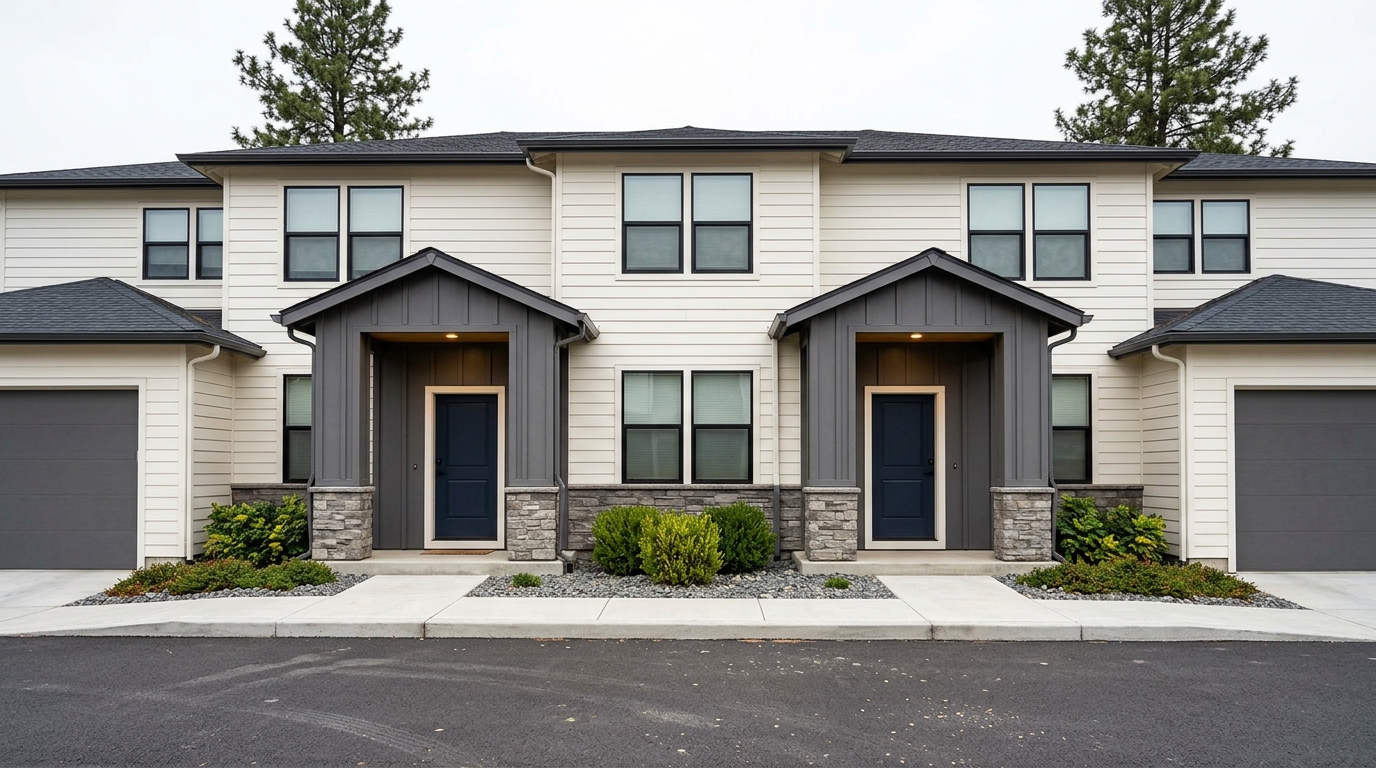
Townhomes can also be a strong option if you want a more traditional home feel with less yard work than an older detached house. Spokane Valley’s housing action plan defines a townhouse development as three to six attached single-family units side by side.
The same plan defines a cottage development as small detached single-family units grouped around a common area. These formats can appeal to buyers who want efficient space, simpler outdoor upkeep, and a community layout that feels more connected.
Spokane Valley allows townhouses and cottages in several zoning districts, including R-4, MFR, MU, CMU, and Neighborhood Commercial. The city’s planning work also recommended focusing R-4 housing near public transportation and services, which supports a lifestyle with fewer long drives for daily needs.
PRD-style communities
Another option to watch is the planned residential development, often called a PRD. These communities can include shared open space and layouts that feel more communal and less yard-intensive than many older single-family areas.
Spokane Valley’s PRD requirements call for landscape plans for common open-space areas. The city also requires dedicated common open space to make up at least 30 percent of the PRD gross land area.
That design approach can create a different ownership experience. You may have less private yard to maintain, while still benefiting from open space that is part of the larger community setting.
Retirement-oriented communities
Spokane Valley also includes retirement communities among its housing styles. For some buyers, these communities may offer the simpler living arrangement they want.
Still, it is important not to assume a community is formally age-restricted just because it is marketed toward retirees or older adults. In Washington, housing for older persons follows specific fair-housing rules, so the details should always be verified for any community you are considering.
Where to look in Spokane Valley
If you are trying to narrow your search, city planning documents offer helpful clues. Spokane Valley’s comprehensive plan says multifamily residential land is generally located near business and commercial centers, arterial streets, and public transit.
That means low-maintenance housing is often clustered where errands and commuting may be easier. Rather than looking only in traditional single-family areas, it often makes sense to start near mixed-use and commercial corridors.
Sprague Avenue corridor
The city identifies Corridor Mixed-Use primarily along Sprague Avenue and north-south arterials. It also describes Sprague Avenue as an urban transportation corridor suited to multimodal travel and higher-density mixed-use development.
For buyers, that can translate into more opportunities to find condos, townhome-style homes, or other smaller-footprint housing near services. If convenience is high on your list, this is a practical area to study.
Sullivan and mall area
Spokane Valley’s comprehensive plan also identifies Regional Commercial areas along Sprague, the Sullivan Road area from Sprague north to the Interstate 90 interchange, and the Spokane Valley Mall and Walmart area. These are the kinds of locations where housing near shopping, services, and major roads may be more common.
If your version of low-maintenance living includes shorter errand runs and easier access to everyday destinations, these areas deserve a closer look.
Transit-connected pockets
Transit can make a real difference if you want a less car-dependent routine. Spokane Valley’s comprehensive plan points to the Pence-Cole Valley and Mirabeau Point transit centers, and notes that Route 90 runs every 15 minutes during weekday peak and daytime periods.
For some buyers, that combination of housing density and transit access is a big part of the low-maintenance appeal. It is not just about less yard work. It is also about making daily life simpler.
What Spokane Valley is building toward
Spokane Valley is still largely known for single-family housing on larger lots. But the city’s planning documents also show clear support for more diverse housing choices in targeted areas.
The housing action plan says the city implemented missing-middle regulations in 2017 and created the R-4 urban residential zone in 2020. Those changes were intended to support more diverse housing close to public transportation and services.
That does not mean Spokane Valley is suddenly a condo-first market. It does mean buyers who want lower-maintenance options have more reason to search strategically, especially near key corridors and services.
HOA tradeoffs to understand
Low-maintenance living often works because an association helps manage exterior upkeep, common areas, or shared systems. That convenience can be valuable, but it also means you should pay close attention to the association itself.
Washington HOA law requires annual meetings, notice, access to minutes, and annual financial statements. Condo associations also have reserve-study requirements designed to estimate major maintenance, repair, and replacement costs.
In simple terms, monthly dues are only part of the picture. You also want to understand whether the community appears to be planning responsibly for long-term upkeep.
Documents to review carefully
Before you buy, the paperwork can tell you a lot about how a low-maintenance community actually functions. The most useful documents depend on the type of property and whether it is new or resale.
Here are some of the key items to review:
- Public offering statement for a new condo
- Resale certificate for an existing condo
- Monthly common expense assessment details
- Any unpaid common or special assessments
- Association financial statements
- Reserve study, when applicable
- Association bylaws and meeting records
These records can help you understand what your dues support, how shared upkeep is handled, and whether there may be future costs tied to major repairs or replacements.
Convenience versus control
This is the biggest theme to keep in mind as you compare options. A lower-maintenance property can free up your time and reduce the physical work of ownership, but it often comes with more shared decision-making.
That may include rules about exterior appearance, budgets for common areas, or responsibility for future repairs funded through dues or assessments. For many buyers, that tradeoff is worth it. The key is making sure the community’s structure fits your expectations and comfort level.
A local example to keep in mind
One current Spokane Valley example is the Painted Hills planned residential development at 4403 S Dishman Mica Rd. The city describes it as including 580 dwelling units, 280 multifamily units, neighborhood commercial space, and about 30 acres of dedicated open space.
That example shows how lower-maintenance housing in Spokane Valley may appear in larger mixed-residential projects, not just in small condo buildings. If you are searching for ease and convenience, it helps to think beyond one housing category.
Price context matters too
As you weigh your options, it helps to keep the broader market in mind. Spokane Valley reported a residential home median sale price of $458,645 in March 2026.
That number does not tell you exactly what a condo, townhome, or PRD-style home will cost, but it does provide useful context. Depending on the property type, location, and association structure, lower-maintenance options may offer a different path into ownership or a simpler next step within the market.
How to choose the right fit
The best low-maintenance option depends on what you want more of and what you are willing to give up. If you want the least exterior responsibility, a condo may be worth focusing on. If you want a little more separation and a more traditional home feel, a townhome or cottage-style setup may be a better match.
If shared green space and community design appeal to you, a PRD-style neighborhood could be worth exploring. And if convenience is a top priority, looking near Sprague, Sullivan, Mirabeau Point, or transit-connected areas may help you find the right balance.
A calm, informed search makes a big difference here. When you compare the layout, location, dues, documents, and rules side by side, it becomes much easier to tell which homes truly support the lifestyle you want.
If you want help sorting through condos, townhomes, new construction, or other low-maintenance options in Spokane Valley, John LJ Kennedy offers the kind of clear, local guidance that can make your next move feel a lot simpler.
FAQs
What are low-maintenance living options in Spokane Valley?
- In Spokane Valley, low-maintenance living options can include condominiums, townhomes, cottage-style communities, planned residential developments, and some retirement-oriented communities.
Where should you look for low-maintenance homes in Spokane Valley?
- City planning documents suggest looking near business and commercial centers, arterial streets, and public transit, including areas along Sprague Avenue, near Sullivan Road, and around transit centers such as Mirabeau Point and Pence-Cole Valley.
What documents should you review before buying a Spokane Valley condo?
- For a new condo, review the public offering statement. For a resale condo, review the resale certificate, monthly common expense assessment details, unpaid assessments, association financials, and reserve study information.
Do Spokane Valley low-maintenance homes usually have HOA dues?
- Many do, especially condos and communities with shared spaces or exterior maintenance. The exact structure varies, so it is important to review association documents and financial information carefully.
Are townhomes common in Spokane Valley?
- Spokane Valley allows townhomes in several zoning districts, and the city has created planning tools to support more diverse housing, though its housing action plan noted only a limited number of townhome developments at the time it was written.
Is Spokane Valley mainly a condo market?
- No. Spokane Valley is still largely a single-family market, but city planning documents show deliberate support for smaller-footprint and lower-maintenance housing types in targeted areas near transit and services.