
October 15, 2026
Northwest Spokane's Growth Is Happening Behind the Houses Already There
In 2025, Spokane's northwest council district permitted the most ADUs in the city and had the lowest construction value. Here's what that means for the lot under any home you tour.
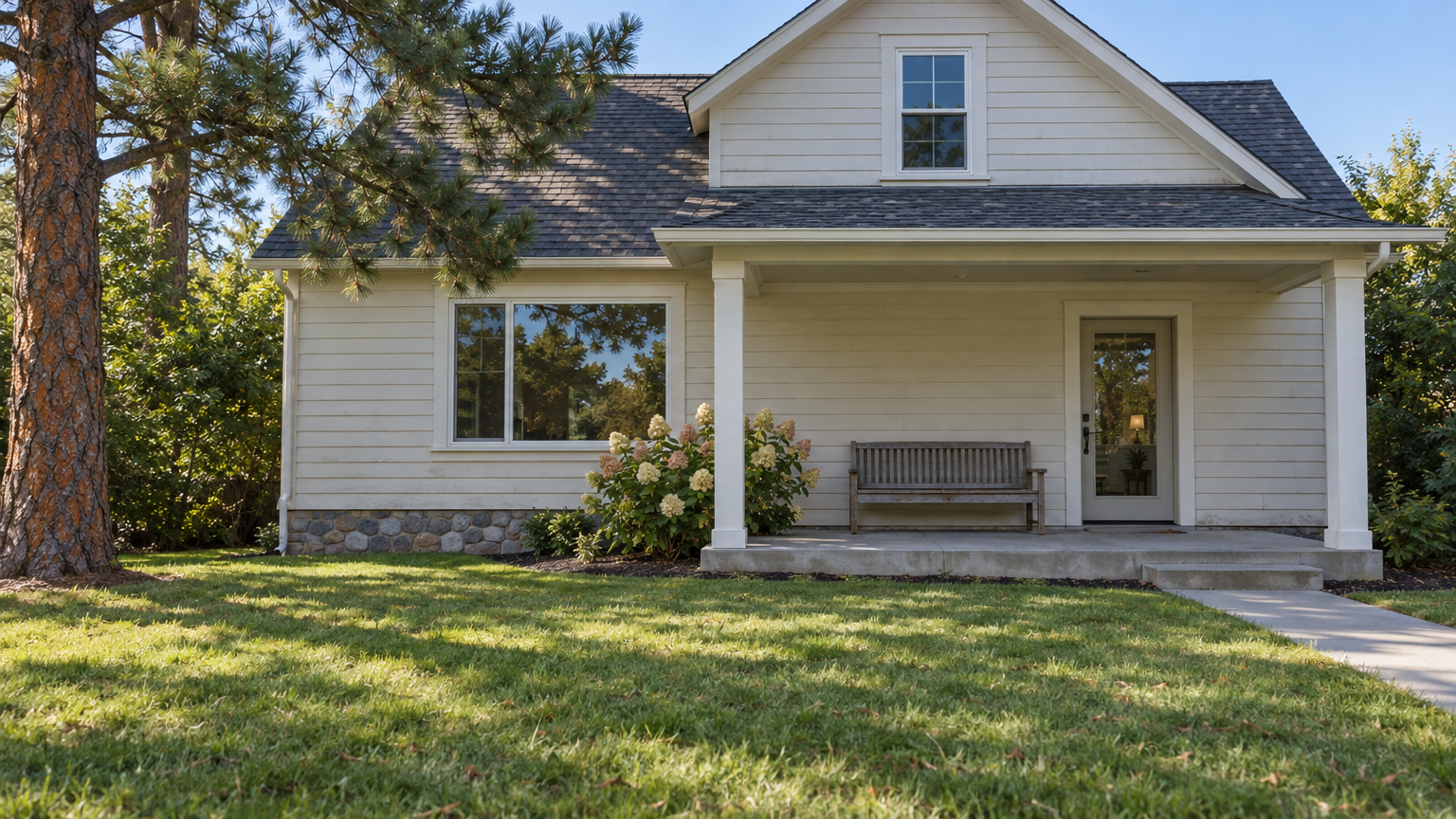
Under Spokane’s municipal code, a backyard home has to use the same municipal utilities and the same address as the main house on the lot. That one rule shapes what you are actually buying when a Northwest Spokane listing includes a cottage out back. You get one property with one service connection and one street number. The second dwelling shares the infrastructure of the first.
The rule applies across the city, but in 2025 the northwest part of Spokane used it more than any other area. The city’s council district that covers the northwest permitted more accessory dwelling units than the other two districts. It also logged the lowest total construction value of the three. Small additions on existing lots are driving growth here, and that changes how a home in this part of town should be compared to one elsewhere.
What the City’s 2025 Numbers Show for the Northwest
Spokane City Council District 3 is the one the city labels “Northwest.” Its neighborhood councils are Audubon/Downriver, Balboa/South Indian Trail, Browne’s Addition, Emerson/Garfield, Five Mile Prairie, North Hill, North Indian Trail, Northwest, Peaceful Valley, and West Central.
The city’s 2025 Community & Economic Development year in review, published March 3, 2026, breaks down building activity by district.
| 2025, by council district | District 1 | District 2 | District 3, Northwest |
|---|---|---|---|
| Building permits issued | 1,544 | 1,993 | 1,962 |
| Residential remodels | 971 | 1,457 | 1,590 |
| Residential units | 473 | 129 | 145 |
| ADUs | 9 | 17 | 28 |
| Total construction value | $226.5 million | $146.4 million | $76.1 million |
In 2025, District 3 led the city in remodels and in ADUs, but its construction dollars were about a third of District 1’s. District 1 added more than three times as many residential units, the kind of total that large projects produce. In the Northwest, the work is spread across many existing properties. Owners finished basements, converted garages, and added a second dwelling behind the first.
This matters for a buyer because the stock in the Northwest is changing one parcel at a time. Two houses on the same block can now differ in more than square footage or finishes. They can differ in what their lots already hold and what those lots could legally hold next.
The Rules That Gave Every Lot an Option
Spokane opened these doors in stages. An interim ordinance known as Building Opportunity and Choices for All was approved in July 2022 and allowed up to four units on a single-family lot. It expired in December 2023 and was replaced by permanent rules called Building Opportunity for Housing. Since January 1, 2024, those rules have:
- allowed middle housing types in residential zones
- reduced minimum lot sizes
- removed density maximums on lots under two acres
- broadened unit-lot subdivision options
- waived residential parking requirements within a half-mile of a transit stop
Follow-up amendments took effect March 6, 2025, to clarify how the code is administered and to fix implementation problems, including design requirements. An ADU ordinance that took effect July 11, 2025, allows two ADUs per lot in the RA, R1, R2, RMF and RHD zones, subject to each zone’s standards.
State law adds another layer. Washington’s Department of Commerce summarizes the ADU requirements for cities like Spokane. Cities must allow two ADUs per residential lot and at least 1,000 square feet per unit. Impact fees can be no more than half of what the main house would pay. Owner-occupancy can’t be required except for short-term rentals. The statute, RCW 36.70A.681, also bars a city from prohibiting the sale of an ADU as a separate condominium unit just because it was first built as an ADU.
For townhome-style projects, a unit-lot subdivision gives each unit its own parcel that can be sold. The individual lots can also depart from the dimensional rules that apply to the original parent lot.
What Using That Option Costs in 2026
Adding a second unit means paying for construction, city permits, possible utility charges and review time.
- Construction. The Building Company, a Spokane-area builder, estimated in June 2025 that ADUs run from about $180,000 to more than $350,000, depending on type, size, finishes and site conditions. In May 2025, a co-founder of Brio Tiny Homes told the Spokane Journal of Business that a 1,000-square-foot ADU would land in the low $200,000s and a 300- to 700-square-foot unit around $115,000 to $175,000.
- City permit fees. The 2026 development fee schedule, effective January 1, 2026, sets a $65 application fee, a 2.5% technology fee and a $119 development services review fee. Building permit fees are based on project valuation, and ADU plan review is set at 50% of that fee. Plumbing, mechanical and electrical work each need their own permits.
- Utility charges. The city’s published 2026 general facilities charges for a new 5/8-inch water and wastewater service total $8,362, made up of $3,475 for water and $4,887 for wastewater. Those charges apply to new services and upgrades. Because an ADU has to use the main house’s utilities, what a particular project owes depends on its meter and service situation. That is a question for the city, not an assumption to build into an offer.
- Time. In 2025, average first reviews for new single-family homes, detached ADUs and duplexes dropped from almost 30 days in March to 15 days by October.
These layers add up to real money next to the market. In September 2026, the median closed price for Spokane County homes on less than an acre was $419,995, according to Spokane REALTORS. At the builder’s quoted range, a backyard unit costs at least about 43% of that median, and the more expensive projects reach 83% or more.
Builders say the cost goes beyond construction. In November 2025, developers quoted by the Spokane Journal of Business named financing, infrastructure, permitting complexity and construction costs as ongoing obstacles. One said a small fourplex can face the same process as a much larger commercial project.
Why the Street Still Looks Mostly the Same
Those costs explain why the zoning changes haven’t remade Northwest Spokane’s blocks. Citywide, Spokane issued 121 middle-housing permits in 2025, the highest annual total the city has recorded. The Spokane Journal of Business reported in May 2026 that middle housing made up 17% of residential permits in 2025, up from 10% in 2024 and 8% in 2023. The city and the Journal define middle housing differently, so the two sets of figures aren’t one continuous series.
In that same Journal report, city performance and business analyst Ryan Thompson summed up the trend:
“The key takeaway is that while zoning changes have not made middle housing a dominant category for our issued housing units, they have helped stabilize and improve a previously underperforming housing segment.”
The biggest middle-housing project in the Northwest is still a plan. The Journal reported that Spokane-based Avey Construction Group LLC is planning a 24-unit townhome project on a 2.5-acre lot at 7724 N. Austin Road on Five Mile Prairie. It calls for four three-story, three-unit buildings and four three-story, four-unit buildings. For comparison, a finished project about four miles away, the 15-unit Khinda Townhomes at 3165 N. Stuart in northeast Spokane, offers market-rate rentals starting at $1,800.
So the large projects are few and slow, and the small ones are spread out. The 28 ADUs District 3 permitted in 2025 are scattered across ten neighborhood councils, so you wouldn’t spot them driving through.
Reading a Northwest Spokane Listing With the Lot in Mind
The broader market leaves time for this kind of checking. In September 2026, Spokane County had 1,620 active listings and 3.0 months of supply. The median for new construction on less than an acre was $448,470, and the median resale price was $411,500. At that pace, buyers can usually ask questions before writing an offer.
When a Northwest Spokane home has an existing backyard unit, or a lot that looks like it could take one, these questions turn the lot into something you can compare:
- Was the second unit permitted and given a certificate of occupancy? The city requires both for an ADU.
- Which residential zone is the lot in, and what do that zone’s standards allow?
- Does the unit share the main house’s meter and service, as the code requires, and what would a larger service cost if the city required one?
- If the unit started as a garage or shop, was floor area added? Under the code, adding floor area to convert an existing detached structure means the whole structure has to meet the zone’s development standards.
- Is the unit, or the whole property, being marketed as separately sellable, and what recorded documents back that up?
Questions Buyers Ask About Backyard Units
Can I buy just the ADU behind a house?
State law says a city can’t block an ADU from being sold as a condominium unit just because it began as an ADU. Whether a particular unit has actually been set up that way depends on its recorded documents.
Does the owner have to live on the property?
Under state rules, a city can’t require owner-occupancy for an ADU except for short-term rentals.
Will a fourplex go up next door?
Current rules allow middle housing on residential lots. In 2025, though, District 3’s growth came mostly as remodels and ADUs, and its construction value was the lowest of the city’s three districts.
This post is general information, not legal, tax or financial advice. Codes and fees change every year, so check your own property and plans with the City of Spokane and the right professionals.
If you’re looking at a Northwest Spokane home and want to understand its lot as well as its floor plan, John Kennedy can go through the permits, zoning and utility questions with you before you make an offer. Schedule a free consultation and bring the listing you’re considering.