

August 20, 2026
Cheney WA Real Estate Market: Why Timing Matters
Cheney WA real estate market follows both homebuying and EWU leasing cycles. See how that timing shapes prices, listings, and offers before you buy.
Photo: Lucasreynolds16, CC BY-SA 4.0
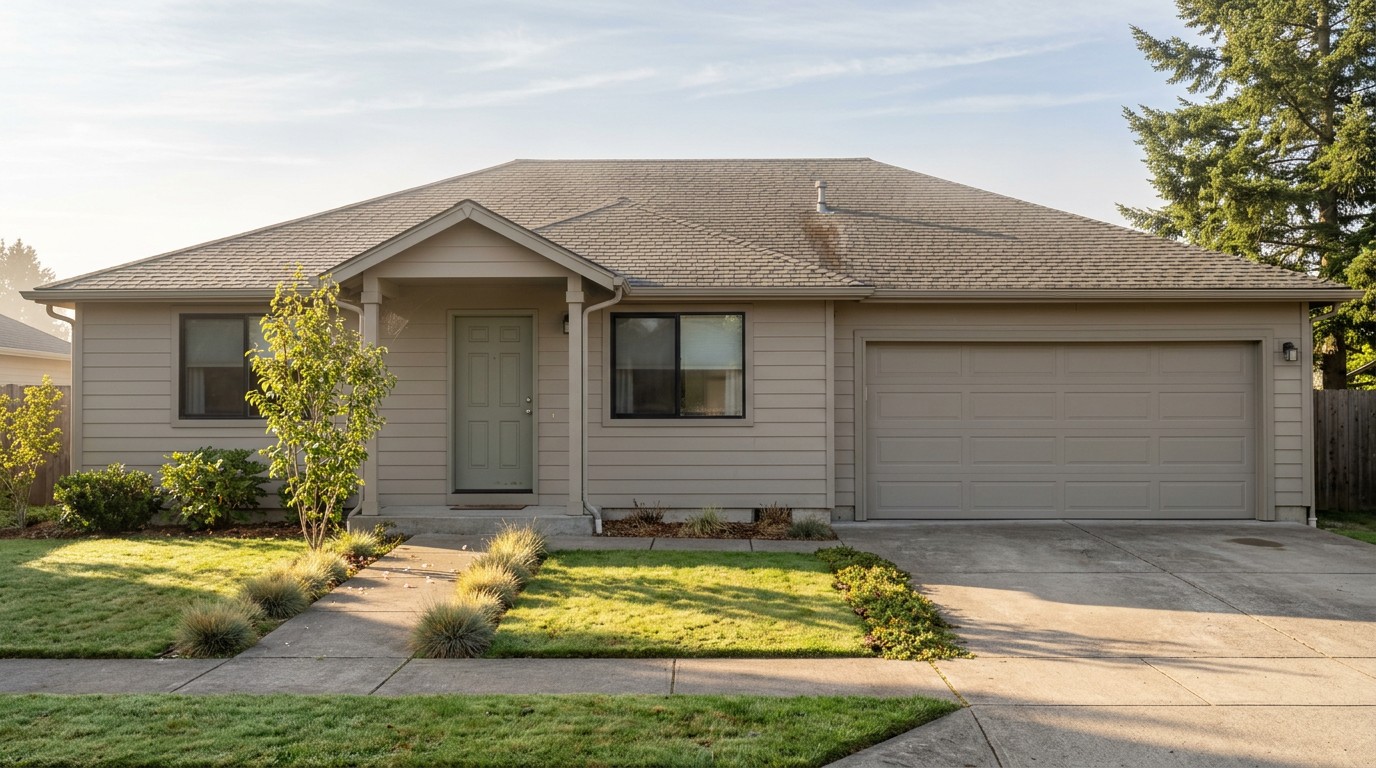
A buyer touring a three-bedroom rancher near Eastern Washington University on a gray November afternoon might walk away thinking the house is a hard sell. Blinds drawn, driveway empty, nobody home for the second showing in a row. What that buyer is actually looking at, more often than not, is a property in the quiet stretch of its lease term. The tenants are mid-semester. Nobody is moving anywhere until spring finals, and the owner has no reason to disturb a paying arrangement just because a buyer wants a walkthrough on a random Tuesday.
That single moment says more about Cheney’s housing market than any median price chart. This is a city where two different calendars run underneath one set of listings, and knowing which calendar you’re looking at changes how you read almost everything on the MLS.
Two Clocks, One City
Cheney is home to Eastern Washington University, and the university’s academic year sets a rhythm that has nothing to do with spring homebuying season. Roughly two-thirds of Cheney households rent rather than own, a share well above what you’d expect in a typical Spokane-area suburb. That renter majority isn’t spread evenly across the city. It concentrates in a defined zone around campus, where single-family homes, small multiplexes, and purpose-built student housing operate on lease terms tied to the school year rather than to a calendar year.
The physical evidence of that overlay is easy to spot once you know to look for it. The old Cheney High School building, built around 1930, was converted into School House Lofts, student housing suites carved out of the historic schoolhouse across the street from Showalter Hall. The Grove at Cheney sits less than a mile from campus and rents by the bedroom. Properties on what locals call Greek Row, a stretch just a block from campus, trade on that walking distance as much as their square footage. None of these properties are competing for the same buyer as a rancher in a subdivision on the south edge of town, even though they might show up in the same price bracket on a search filter.
Property managers who work this market describe leasing that peaks in the weeks before fall term and goes quiet through the middle of the year, with turnover clustering tightly around the academic calendar rather than spreading out evenly across twelve months. A homebuyer used to a market where showings and offers follow the usual spring bump has to recalibrate here. A near-campus listing that looks slow in October may simply be waiting for August.
What the Price Gap Actually Buys
Cheney homes consistently price below comparable homes in Spokane and Spokane Valley, and the gap runs somewhere in the range of 15 to 25 percent depending on the comparison set. Part of that reflects the commute. Part of it reflects something less obvious: a meaningful share of Cheney’s housing stock is priced against rental yield potential, not against what a family would pay to live in the house themselves. When investor demand and owner-occupant demand are both bidding on the same pool of houses, but one group is underwriting the price against nine months of student rent instead of long-term equity building, the blended price sits lower than it would in a market where everyone is buying with the same intentions.
That dynamic plays out differently across three rough zones inside the city.
| Submarket | Typical buyer | Price behavior | Calendar sensitivity |
|---|---|---|---|
| Near-campus rental zone | Investors, EWU staff seeking proximity | Priced against rental yield, less tied to spring selling season | High, moves with fall lease turnover |
| Original in-between grid | Mixed, long-tenure locals and value buyers | More stable, slower turnover | Moderate |
| South and west subdivisions | Owner-occupants and relocation buyers | Prices track more closely with broader Spokane suburb trends | Low, follows traditional spring and summer season |
A buyer shopping the south or west subdivisions is largely insulated from the academic calendar. A buyer looking at anything within easy walking distance of campus, including some homes that read as ordinary residential properties on paper, is shopping in a market where an owner’s exit timing and a tenant’s lease term matter more than the season on the wall calendar.
Two Growth Stories in the Same Chart
Cheney has posted one of the stronger long-term appreciation records in the country, up 117.88 percent over the trailing ten years according to NeighborhoodScout, a pace that puts it in the top 20 percent of communities nationally. Look at the more recent twelve-month window in that same dataset and the picture changes completely: appreciation slowed to just 1.63 percent, trailing most communities in the country. Then the most recent quarter alone showed a 3.74 percent gain, an annualized pace of 15.83 percent, suggesting the market may be reaccelerating after a flatter stretch.
Three numbers, three different stories, and all three are true at the same time. That’s what a market with two overlapping calendars looks like from the outside. A ten-year window captures a college town that has steadily converted enrollment stability into home value. A trailing twelve-month window can land in the middle of a soft leasing season and read as stalled. A single quarter can catch the run-up before fall turnover and look like a hot streak.
Current pricing carries the same split personality depending on which number you check. As of July 2026, Cheney homes were listed at a median of $469,000, spending a median of 83 days on market before going under contract. Sold prices tracked over the same recent period ran closer to $438,000, up 11.1 percent from a year earlier. List price and sold price rarely diverge by that much in a market with one clean rhythm. In Cheney, they diverge because list prices reflect what sellers think the house is worth against a mix of buyer types, while sold prices reflect what actually clears once you sort out which buyers were shopping the family calendar and which were shopping the lease calendar.
Reading a Cheney Listing With the Right Clock
Before you write an offer, a few questions will tell you which calendar a given property is really running on.
- Is the home inside easy walking distance of campus, and does the floor plan look configured for roommates rather than a family?
- Does the listing disclose current tenant occupancy, and if so, what does the lease term look like relative to the academic year?
- Has the home been on the market longer than the Cheney median of 83 days, and if so, is that because of condition, price, or simply because it’s sitting in the slow season between fall move-ins?
- Are nearby comparable sales clustered around August closings, which would suggest an investor-driven turnover pattern rather than a typical owner-occupant sale?
None of this means avoiding homes near campus if that’s what fits your life. Plenty of residents, including long-tenure locals, live comfortably in that zone, and the original residential grid between campus and the newer subdivisions still offers some of the best value-per-square-foot in the greater Spokane market. It means going in with the right expectations. A house that looks quiet on a fall showing isn’t necessarily unwanted. A house that sells fast in July isn’t necessarily proof of owner-occupant competition. It might just be an investor closing ahead of the August rush, same as it has every year EWU has been open for business.
A Few Straight Answers
Does the rental market make Cheney a bad choice for an owner-occupied home? No. It makes certain pockets of Cheney behave differently than a typical suburb. The subdivisions on the south and west edges of town track the broader Spokane market closely and aren’t meaningfully touched by the academic calendar.
Why do different sources show such different appreciation numbers for Cheney? Because they’re measuring different windows, and Cheney’s growth hasn’t been a straight line. A ten-year view captures sustained, university-anchored demand. A trailing twelve-month view can land during a seasonal soft patch. Both are accurate. Neither tells the whole story alone.
If I’m not investing in a rental, does the leasing calendar matter to me at all? It matters most in how you interpret what you see during a showing. Days on market, a quiet house, a fast sale down the street: all of it reads differently once you know whether the property in question is playing by the academic calendar or the ordinary homebuying one.
Cheney rewards buyers who understand its two-track economy, whether you’re weighing a rental property near Showalter Hall, a starter home in the original grid, or a house on the quieter west side. If you want a clear read on which submarket fits your goals and how a specific listing’s history stacks up against the academic calendar, John Kennedy can walk through the comparables with you and help you time an offer around the right clock, not the wrong one. Schedule a free consultation to get started.